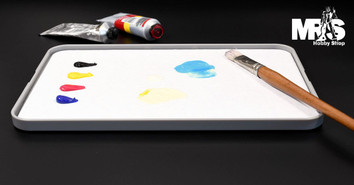
You sit down to paint your miniatures, load up your brush, and two strokes later, the paint is already drying on the palette. Sound familiar? That's one of the most frustrating parts of painting miniatures, and it's a problem a wet palette solves completely. If you haven't used one yet, this post will show you exactly what it is, how it works, and why it belongs on every hobby table.
What Exactly Is a Wet Palette?
A wet palette is a simple painting tool that keeps your acrylic paints wet and workable for much longer than a standard plastic or ceramic palette. It's made up of a shallow tray, a layer of water-absorbing paper or foam at the bottom, and a semi-permeable membrane on top, usually made from baking paper or a dedicated hydration sheet.
You add a small amount of water to the tray, Hobby Supplies Salt Lake City place the membrane on top, and then put your paint directly on the membrane. The moisture from below seeps through slowly, keeping the paint moist without flooding it. The result is paint that stays smooth and blendable for hours, sometimes even days if you close the lid between sessions.
Why Does It Matter for Miniature Painting?
Acrylic paint dries fast. That's fine when you're blocking in base colors quickly, but it's a real problem when you want to blend colors smoothly or work on a single area for more than a few minutes. Thin acrylic paint dries even faster, which makes smooth blending almost impossible on a regular palette.
A wet palette changes all of that. The moisture keeps paint at the right consistency, so you can blend, feather, and layer without rushing. You stop wasting paint that dries mid-session, and your colors stay true rather than shifting as the water evaporates. For anyone serious about miniature painting quality, it's not optional. It's a basic part of the setup.
Are Wet Palettes Only for Advanced Painters?
Not at all. This is one of the biggest myths around wet palettes. Beginners actually benefit more than experienced painters in some ways, because it removes the time pressure that makes painting feel stressful. You can take your time mixing colors, adjust your thinning ratio, and work at a relaxed pace without constantly re-wetting your paint.
Experienced painters use wet palettes for smooth blending techniques like glazing, wet blending, and feathering. Beginners use them simply to keep their paint usable. Either way, the wet palette does the job without any complicated setup.
What Types of Wet Palettes Are Available?
Most hobby-grade wet palettes come in two formats. The first is a basic kit: a plastic tray, sponge layer, and paper membrane that you assemble yourself. These work well and are affordable, making them a solid starting point. The second is a ready-to-use palette with a tight-fitting lid, pre-cut hydration sheets, and a refined membrane that offers more control over moisture transfer.
Brands like Army Painter & Hobby Store Online offer purpose-built wet palettes designed specifically for miniature painting, with paper sized for the tray and membrane material that handles thin acrylic paints without bleeding through. Some painters also use DIY setups made from household containers and baking parchment, which work fine but require a bit more trial and error to get the moisture level right.
How to Use a Wet Palette Correctly
Setup takes less than two minutes. Soak the sponge or foam pad lightly in clean water. Don't saturate it. Place your membrane sheet on top and press out any air bubbles. Squeeze a small amount of paint onto the membrane, and you're ready to go. Close the lid between painting sessions, and your paint can stay usable for several days.
One tip worth knowing: don't add water directly on top of your paint on the membrane. The moisture comes from below, and that's enough. Adding water on top makes the paint runny and harder to control. Let the palette do the work the way it's designed to.
Your Paint Deserves Better Than a Dry Palette
A wet palette isn't a luxury upgrade. It's one of the most practical tools you can add to your hobby setup, and it improves every session the moment you start using it. Fewer dried blobs of wasted paint, smoother blends, and more time actually painting instead of fighting your materials.
MRS Hobby Shop offers a solid selection of wet palettes, palette paper refills, and everything else you need to set up a proper painting station. Whether you're browsing as a first-time painter or restocking your supplies, the team can point you to the right tools for your setup.
Shoppers looking for a reliable hobby store online can browse the full range at our shop and order from a store that actually knows what each product is for.
FAQ: Wet Palettes for Miniature Painters
Q1. What's the difference between a wet palette and a regular palette?
A1. A regular palette lets paint dry quickly, often within minutes. A wet palette keeps paint moist for hours or days by feeding moisture through a membrane from a water-soaked layer underneath.
Q2. Can I use a wet palette with all acrylic paints, including Citadel, Vallejo, and Army Painter?
A2. Yes. Wet palettes work with all water-based acrylic paints. Brands like Citadel, Vallejo, Army Painter, and AK Interactive all perform well on a wet palette.
Q3. How long does paint stay usable on a wet palette?
A3. Sealed properly, most acrylic paints stay workable on a wet palette for two to four days. Some painters report keeping paint fresh for up to a week with a good-quality membrane and a tight lid.
Q4. Where can I find wet palette supplies as part of my hobby supplies in Salt Lake City?
A4. MRS Hobby Shop in Sandy carries wet palettes and palette paper refills, making it easy to pick up everything you need in one stop without ordering from multiple sources online.
Q5. Do I need to buy a branded wet palette, or can I make one myself?
A5. You can make a basic DIY version using a shallow container, a cut sponge, and baking parchment. It works, but a purpose-built palette from a hobbies model shop gives you better moisture control and a proper lid that extends how long your paint stays fresh.